 scale(0.100000,-0.100000)%22%3E%3Cpath d=%22M4297 11020 c-251 -23 -537 -106 -727 -212 -443 -246 -736 -645 -826 -1123 -18 -97 -19 -207 -19 -3245 0 -3437 -4 -3204 61 -3464 145 -585 533 -1052 1103 -1330 52 -25 105 -46 118 -46 39 0 90 26 110 56 17 27 18 80 24 959 5 900 6 934 28 1060 53 314 144 569 297 832 219 376 589 741 999 983 50 29 119 70 155 91 177 104 553 265 830 353 495 159 1130 272 1651 293 l156 6 -3 -229 c-7 -645 -130 -1193 -376 -1677 -155 -306 -373 -585 -598 -766 -329 -265 -571 -377 -1169 -542 -500 -137 -709 -225 -974 -409 -116 -80 -331 -295 -415 -415 -113 -160 -204 -370 -238 -552 -15 -79 -14 -89 1 -129 10 -28 28 -51 49 -64 33 -20 41 -20 1478 -20 1442 0 1599 3 1808 36 677 106 1325 449 1770 938 130 141 202 234 296 376 549 834 695 1868 404 2865 -103 350 -280 710 -483 980 -361 479 -868 808 -1442 935 -328 73 -460 80 -1577 80 l-908 0 0 1108 c0 1199 0 1198 -55 1387 -76 262 -240 486 -464 636 -134 90 -197 122 -340 169 -216 72 -482 102 -724 80z%22/%3E%3Cpath d=%22M6314 10340 c-26 -10 -72 -65 -79 -93 -3 -12 -4 -400 -3 -862 l3 -840 28 -79 c78 -222 264 -396 497 -467 l75 -23 867 -4 c958 -3 918 -6 958 60 11 18 20 45 20 60 0 60 79 -22 -1100 1143 -927 916 -1090 1075 -1122 1095 -34 21 -105 26 -144 10z%22/%3E%3C/g%3E%3C/g%3E%3Cpath fill=%22%230B1220%22 d=%22M1436.7552 845.272V779.8000000000001H1547.4624000000001Q1577.2224 779.8000000000001 1592.4 763.432Q1607.5776 747.0640000000001 1607.5776 717.8992000000001Q1607.5776 688.1392000000001 1591.2096000000001 670.8784Q1574.8416 653.6176 1544.4864 653.6176H1436.7552V588.1456000000001H1539.7248Q1567.6992 588.1456000000001 1582.2816 574.7536Q1596.864 561.3616 1596.864 535.1728Q1596.864 508.98400000000004 1582.8768 495.592Q1568.8896 482.2 1541.5104000000001 482.2H1436.7552V416.728H1561.152Q1618.2912000000001 416.728 1653.4080000000001 445.8928Q1688.5248000000001 475.05760000000004 1688.5248000000001 525.0544Q1688.5248000000001 556.6 1673.6448 579.2176Q1658.7648 601.8352 1633.7664 613.7392Q1608.768 625.6432 1577.8176 625.6432L1580.7936 613.144Q1614.1248 613.144 1641.2064 627.4288Q1668.288 641.7136 1684.3584 667.6048000000001Q1700.4288000000001 693.4960000000001 1700.4288000000001 728.6128Q1700.4288000000001 763.7296 1684.0608000000002 790.216Q1667.6928 816.7024 1638.2304 830.9872Q1608.768 845.272 1568.8896 845.272ZM1361.76 845.272V416.728H1453.4208V845.272Z M1742.0928 845.272V416.728H1831.3727999999999V845.272Z M2034.9312 851.224Q1984.9343999999999 851.224 1947.1391999999998 831.2848000000001Q1909.3439999999998 811.3456000000001 1888.2143999999998 775.336Q1867.0847999999999 739.3264 1867.0847999999999 692.3056Q1867.0847999999999 645.2848 1888.2143999999998 610.168Q1909.3439999999998 575.0512 1947.1391999999998 555.4096Q1984.9343999999999 535.768 2034.9312 535.768Q2085.5232 535.768 2123.3184 555.4096Q2161.1135999999997 575.0512 2181.9456 610.168Q2202.7776 645.2848 2202.7776 692.3056Q2202.7776 739.3264 2181.648 775.336Q2160.5184 811.3456000000001 2122.7232 831.2848000000001Q2084.928 851.224 2034.9312 851.224ZM2034.9312 780.9904Q2055.7632 780.9904 2072.7263999999996 770.2768000000001Q2089.6895999999997 759.5632 2099.808 739.624Q2109.9264 719.6848 2109.9264 691.7104Q2109.9264 650.6416 2088.2016 628.3216Q2066.4768 606.0016 2034.9312 606.0016Q2003.3855999999998 606.0016 1981.6607999999999 628.6192000000001Q1959.936 651.2368 1959.936 691.7104Q1959.936 719.6848 1970.0544 739.624Q1980.1727999999998 759.5632 1997.136 770.2768000000001Q2014.0991999999999 780.9904 2034.9312 780.9904Z M2378.3615999999997 973.24Q2315.2704 973.24 2275.6895999999997 946.456Q2236.1088 919.672 2228.9664 873.8416000000001H2313.4847999999997Q2318.2464 885.1504000000001 2334.0191999999997 891.1024000000001Q2349.792 897.0544000000001 2374.1952 897.0544000000001Q2414.6688 897.0544000000001 2433.12 881.5792000000001Q2451.5712 866.104 2451.5712 833.368V767.3008L2456.3328 768.4912Q2450.3808 801.8224 2421.8112 821.1664000000001Q2393.2416 840.5104 2350.9824 840.5104Q2310.5088 840.5104 2280.4512 821.7616Q2250.3936 803.0128000000001 2233.728 769.0864000000001Q2217.0624 735.1600000000001 2217.0624 689.3296Q2217.0624 642.904 2234.3232 608.3824Q2251.584 573.8608 2282.832 554.8144Q2314.08 535.768 2355.7439999999997 535.768Q2398.5984 535.768 2425.68 556.0048Q2452.7616 576.2416000000001 2457.5232 611.3584000000001L2453.3568 611.9536V541.72H2540.8512V832.1776000000001Q2540.8512 897.6496000000001 2497.4016 935.4448Q2453.9519999999998 973.24 2378.3615999999997 973.24ZM2381.9328 772.0624Q2413.4784 772.0624 2433.12 750.3376000000001Q2452.7616 728.6128 2452.7616 688.1392000000001Q2452.7616 647.6656 2432.8224 625.9408000000001Q2412.8831999999998 604.216 2380.7424 604.216Q2349.792 604.216 2329.8527999999997 626.2384Q2309.9136 648.2608 2309.9136 688.7344Q2309.9136 729.2080000000001 2329.8527999999997 750.6352Q2349.792 772.0624 2381.9328 772.0624Z%22/%3E%3Cpath fill=%22%231F63F5%22 d=%22M2718.8160000000003 845.272V486.96160000000003H2578.944V416.728H2950.3488V486.96160000000003H2810.4768V845.272Z M3131.2896 851.224Q3080.6976 851.224 3043.2 831.2848000000001Q3005.7024 811.3456000000001 2985.168 775.6336000000001Q2964.6336 739.9216 2964.6336 693.4960000000001Q2964.6336 646.4752000000001 2985.168 611.0608000000001Q3005.7024 575.6464000000001 3042.6048 555.7072000000001Q3079.5072 535.768 3128.3136 535.768Q3175.3344 535.768 3209.856 554.8144Q3244.3776000000003 573.8608 3263.424 607.7872Q3282.4704 641.7136 3282.4704 687.5440000000001Q3282.4704 697.0672000000001 3281.8752000000004 705.1024Q3281.28 713.1376 3280.0896000000002 720.28H3017.0112V661.3552H3208.0704L3192.5952 672.0688Q3192.5952 635.1664000000001 3175.0368 617.6080000000001Q3157.4784 600.0496 3127.1232 600.0496Q3092.0064 600.0496 3072.6624 623.8576Q3053.3184 647.6656 3053.3184 695.2816Q3053.3184 741.7072000000001 3072.6624 764.3248000000001Q3092.0064 786.9424 3130.6944000000003 786.9424Q3152.1216 786.9424 3167.5968000000003 779.8Q3183.072 772.6576 3190.8096 756.5872H3274.7328Q3259.8528 800.6320000000001 3223.8432000000003 825.9280000000001Q3187.8336 851.224 3131.2896 851.224Z M3318.1824 845.272V541.72H3405.6768V613.144H3407.4624000000003V845.272ZM3529.4784 845.272V657.1888Q3529.4784 632.1904000000001 3516.6816 619.6912Q3503.8848000000003 607.192 3479.4816 607.192Q3458.6496 607.192 3442.2816000000003 616.7152Q3425.9136000000003 626.2384 3416.688 642.904Q3407.4624000000003 659.5696 3407.4624000000003 682.1872000000001L3399.7248 608.9776Q3414.6048 575.6464000000001 3443.472 555.7072000000001Q3472.3392000000003 535.768 3514.5984000000003 535.768Q3565.1904000000004 535.768 3591.9744 564.04Q3618.7584 592.312 3618.7584 639.928V845.272Z M3889.5744000000004 845.272V778.0144L3895.5264 779.2048Q3889.5744000000004 811.9408000000001 3860.112 831.5824Q3830.6496 851.224 3789.5808 851.224Q3747.9168000000004 851.224 3717.264 831.8800000000001Q3686.6112000000003 812.5360000000001 3669.9456 777.4192Q3653.28 742.3024 3653.28 694.6864Q3653.28 646.4752000000001 3670.5408 610.7632000000001Q3687.8016000000002 575.0512 3719.0496000000003 555.4096Q3750.2976000000003 535.768 3791.9616000000005 535.768Q3835.4112000000005 535.768 3862.4928000000004 556.0048Q3889.5744000000004 576.2416000000001 3894.3360000000002 611.3584000000001L3887.7888000000003 611.9536V416.728H3977.0688000000005V845.272ZM3818.1504000000004 779.8000000000001Q3849.6960000000004 779.8000000000001 3869.3376000000003 757.48Q3888.9792 735.1600000000001 3888.9792 693.4960000000001Q3888.9792 651.832 3869.04 629.512Q3849.1008 607.192 3816.9600000000005 607.192Q3786.0096000000003 607.192 3766.0704000000005 629.8096Q3746.1312000000003 652.4272000000001 3746.1312000000003 694.0912000000001Q3746.1312000000003 735.7552000000001 3766.0704000000005 757.7776000000001Q3786.0096000000003 779.8000000000001 3818.1504000000004 779.8000000000001Z%22/%3E%3C/svg%3E)
 scale(0.100000,-0.100000)%22%3E%3Cpath d=%22M4297 11020 c-251 -23 -537 -106 -727 -212 -443 -246 -736 -645 -826 -1123 -18 -97 -19 -207 -19 -3245 0 -3437 -4 -3204 61 -3464 145 -585 533 -1052 1103 -1330 52 -25 105 -46 118 -46 39 0 90 26 110 56 17 27 18 80 24 959 5 900 6 934 28 1060 53 314 144 569 297 832 219 376 589 741 999 983 50 29 119 70 155 91 177 104 553 265 830 353 495 159 1130 272 1651 293 l156 6 -3 -229 c-7 -645 -130 -1193 -376 -1677 -155 -306 -373 -585 -598 -766 -329 -265 -571 -377 -1169 -542 -500 -137 -709 -225 -974 -409 -116 -80 -331 -295 -415 -415 -113 -160 -204 -370 -238 -552 -15 -79 -14 -89 1 -129 10 -28 28 -51 49 -64 33 -20 41 -20 1478 -20 1442 0 1599 3 1808 36 677 106 1325 449 1770 938 130 141 202 234 296 376 549 834 695 1868 404 2865 -103 350 -280 710 -483 980 -361 479 -868 808 -1442 935 -328 73 -460 80 -1577 80 l-908 0 0 1108 c0 1199 0 1198 -55 1387 -76 262 -240 486 -464 636 -134 90 -197 122 -340 169 -216 72 -482 102 -724 80z%22/%3E%3Cpath d=%22M6314 10340 c-26 -10 -72 -65 -79 -93 -3 -12 -4 -400 -3 -862 l3 -840 28 -79 c78 -222 264 -396 497 -467 l75 -23 867 -4 c958 -3 918 -6 958 60 11 18 20 45 20 60 0 60 79 -22 -1100 1143 -927 916 -1090 1075 -1122 1095 -34 21 -105 26 -144 10z%22/%3E%3C/g%3E%3C/g%3E%3Cpath fill=%22%23FFFFFF%22 d=%22M1436.7552 845.272V779.8000000000001H1547.4624000000001Q1577.2224 779.8000000000001 1592.4 763.432Q1607.5776 747.0640000000001 1607.5776 717.8992000000001Q1607.5776 688.1392000000001 1591.2096000000001 670.8784Q1574.8416 653.6176 1544.4864 653.6176H1436.7552V588.1456000000001H1539.7248Q1567.6992 588.1456000000001 1582.2816 574.7536Q1596.864 561.3616 1596.864 535.1728Q1596.864 508.98400000000004 1582.8768 495.592Q1568.8896 482.2 1541.5104000000001 482.2H1436.7552V416.728H1561.152Q1618.2912000000001 416.728 1653.4080000000001 445.8928Q1688.5248000000001 475.05760000000004 1688.5248000000001 525.0544Q1688.5248000000001 556.6 1673.6448 579.2176Q1658.7648 601.8352 1633.7664 613.7392Q1608.768 625.6432 1577.8176 625.6432L1580.7936 613.144Q1614.1248 613.144 1641.2064 627.4288Q1668.288 641.7136 1684.3584 667.6048000000001Q1700.4288000000001 693.4960000000001 1700.4288000000001 728.6128Q1700.4288000000001 763.7296 1684.0608000000002 790.216Q1667.6928 816.7024 1638.2304 830.9872Q1608.768 845.272 1568.8896 845.272ZM1361.76 845.272V416.728H1453.4208V845.272Z M1742.0928 845.272V416.728H1831.3727999999999V845.272Z M2034.9312 851.224Q1984.9343999999999 851.224 1947.1391999999998 831.2848000000001Q1909.3439999999998 811.3456000000001 1888.2143999999998 775.336Q1867.0847999999999 739.3264 1867.0847999999999 692.3056Q1867.0847999999999 645.2848 1888.2143999999998 610.168Q1909.3439999999998 575.0512 1947.1391999999998 555.4096Q1984.9343999999999 535.768 2034.9312 535.768Q2085.5232 535.768 2123.3184 555.4096Q2161.1135999999997 575.0512 2181.9456 610.168Q2202.7776 645.2848 2202.7776 692.3056Q2202.7776 739.3264 2181.648 775.336Q2160.5184 811.3456000000001 2122.7232 831.2848000000001Q2084.928 851.224 2034.9312 851.224ZM2034.9312 780.9904Q2055.7632 780.9904 2072.7263999999996 770.2768000000001Q2089.6895999999997 759.5632 2099.808 739.624Q2109.9264 719.6848 2109.9264 691.7104Q2109.9264 650.6416 2088.2016 628.3216Q2066.4768 606.0016 2034.9312 606.0016Q2003.3855999999998 606.0016 1981.6607999999999 628.6192000000001Q1959.936 651.2368 1959.936 691.7104Q1959.936 719.6848 1970.0544 739.624Q1980.1727999999998 759.5632 1997.136 770.2768000000001Q2014.0991999999999 780.9904 2034.9312 780.9904Z M2378.3615999999997 973.24Q2315.2704 973.24 2275.6895999999997 946.456Q2236.1088 919.672 2228.9664 873.8416000000001H2313.4847999999997Q2318.2464 885.1504000000001 2334.0191999999997 891.1024000000001Q2349.792 897.0544000000001 2374.1952 897.0544000000001Q2414.6688 897.0544000000001 2433.12 881.5792000000001Q2451.5712 866.104 2451.5712 833.368V767.3008L2456.3328 768.4912Q2450.3808 801.8224 2421.8112 821.1664000000001Q2393.2416 840.5104 2350.9824 840.5104Q2310.5088 840.5104 2280.4512 821.7616Q2250.3936 803.0128000000001 2233.728 769.0864000000001Q2217.0624 735.1600000000001 2217.0624 689.3296Q2217.0624 642.904 2234.3232 608.3824Q2251.584 573.8608 2282.832 554.8144Q2314.08 535.768 2355.7439999999997 535.768Q2398.5984 535.768 2425.68 556.0048Q2452.7616 576.2416000000001 2457.5232 611.3584000000001L2453.3568 611.9536V541.72H2540.8512V832.1776000000001Q2540.8512 897.6496000000001 2497.4016 935.4448Q2453.9519999999998 973.24 2378.3615999999997 973.24ZM2381.9328 772.0624Q2413.4784 772.0624 2433.12 750.3376000000001Q2452.7616 728.6128 2452.7616 688.1392000000001Q2452.7616 647.6656 2432.8224 625.9408000000001Q2412.8831999999998 604.216 2380.7424 604.216Q2349.792 604.216 2329.8527999999997 626.2384Q2309.9136 648.2608 2309.9136 688.7344Q2309.9136 729.2080000000001 2329.8527999999997 750.6352Q2349.792 772.0624 2381.9328 772.0624Z%22/%3E%3Cpath fill=%22%235B93FF%22 d=%22M2718.8160000000003 845.272V486.96160000000003H2578.944V416.728H2950.3488V486.96160000000003H2810.4768V845.272Z M3131.2896 851.224Q3080.6976 851.224 3043.2 831.2848000000001Q3005.7024 811.3456000000001 2985.168 775.6336000000001Q2964.6336 739.9216 2964.6336 693.4960000000001Q2964.6336 646.4752000000001 2985.168 611.0608000000001Q3005.7024 575.6464000000001 3042.6048 555.7072000000001Q3079.5072 535.768 3128.3136 535.768Q3175.3344 535.768 3209.856 554.8144Q3244.3776000000003 573.8608 3263.424 607.7872Q3282.4704 641.7136 3282.4704 687.5440000000001Q3282.4704 697.0672000000001 3281.8752000000004 705.1024Q3281.28 713.1376 3280.0896000000002 720.28H3017.0112V661.3552H3208.0704L3192.5952 672.0688Q3192.5952 635.1664000000001 3175.0368 617.6080000000001Q3157.4784 600.0496 3127.1232 600.0496Q3092.0064 600.0496 3072.6624 623.8576Q3053.3184 647.6656 3053.3184 695.2816Q3053.3184 741.7072000000001 3072.6624 764.3248000000001Q3092.0064 786.9424 3130.6944000000003 786.9424Q3152.1216 786.9424 3167.5968000000003 779.8Q3183.072 772.6576 3190.8096 756.5872H3274.7328Q3259.8528 800.6320000000001 3223.8432000000003 825.9280000000001Q3187.8336 851.224 3131.2896 851.224Z M3318.1824 845.272V541.72H3405.6768V613.144H3407.4624000000003V845.272ZM3529.4784 845.272V657.1888Q3529.4784 632.1904000000001 3516.6816 619.6912Q3503.8848000000003 607.192 3479.4816 607.192Q3458.6496 607.192 3442.2816000000003 616.7152Q3425.9136000000003 626.2384 3416.688 642.904Q3407.4624000000003 659.5696 3407.4624000000003 682.1872000000001L3399.7248 608.9776Q3414.6048 575.6464000000001 3443.472 555.7072000000001Q3472.3392000000003 535.768 3514.5984000000003 535.768Q3565.1904000000004 535.768 3591.9744 564.04Q3618.7584 592.312 3618.7584 639.928V845.272Z M3889.5744000000004 845.272V778.0144L3895.5264 779.2048Q3889.5744000000004 811.9408000000001 3860.112 831.5824Q3830.6496 851.224 3789.5808 851.224Q3747.9168000000004 851.224 3717.264 831.8800000000001Q3686.6112000000003 812.5360000000001 3669.9456 777.4192Q3653.28 742.3024 3653.28 694.6864Q3653.28 646.4752000000001 3670.5408 610.7632000000001Q3687.8016000000002 575.0512 3719.0496000000003 555.4096Q3750.2976000000003 535.768 3791.9616000000005 535.768Q3835.4112000000005 535.768 3862.4928000000004 556.0048Q3889.5744000000004 576.2416000000001 3894.3360000000002 611.3584000000001L3887.7888000000003 611.9536V416.728H3977.0688000000005V845.272ZM3818.1504000000004 779.8000000000001Q3849.6960000000004 779.8000000000001 3869.3376000000003 757.48Q3888.9792 735.1600000000001 3888.9792 693.4960000000001Q3888.9792 651.832 3869.04 629.512Q3849.1008 607.192 3816.9600000000005 607.192Q3786.0096000000003 607.192 3766.0704000000005 629.8096Q3746.1312000000003 652.4272000000001 3746.1312000000003 694.0912000000001Q3746.1312000000003 735.7552000000001 3766.0704000000005 757.7776000000001Q3786.0096000000003 779.8000000000001 3818.1504000000004 779.8000000000001Z%22/%3E%3C/svg%3E)
How Live Web Research Ensures Content Accuracy in Automated Blogging
Automated blogging systems using live web research reduce hallucination rates by 73% to 86% through real-time data retrieval. This article explains how retrieval-augmented generation works and why it matters for SEO.
Automated blogging systems relying solely on pre-trained large language models frequently produce factual errors and outdated claims. Live web research automated blogging, built on retrieval-augmented generation architectures, reduces hallucination rates by 73% to 86% by integrating real-time data into the generation process instead of depending on static training weights.
Why Standard Automated Content Fails on Facts
Large language models generate text by predicting probable next tokens based on training patterns. This creates fluent prose but does not guarantee accuracy. When a model lacks reliable parametric knowledge for a specific claim, it hallucinates. It fabricates facts, citations, dates, or statistics that sound plausible but are false.
On open-domain benchmarks like FActScore and SimpleQA, ungrounded LLMs hallucinate at rates between 37% and 47% on long-form tasks, according to Suprmind's 2026 accuracy analysis. The problem worsens in fast-moving niches where training data cannot capture recent developments.
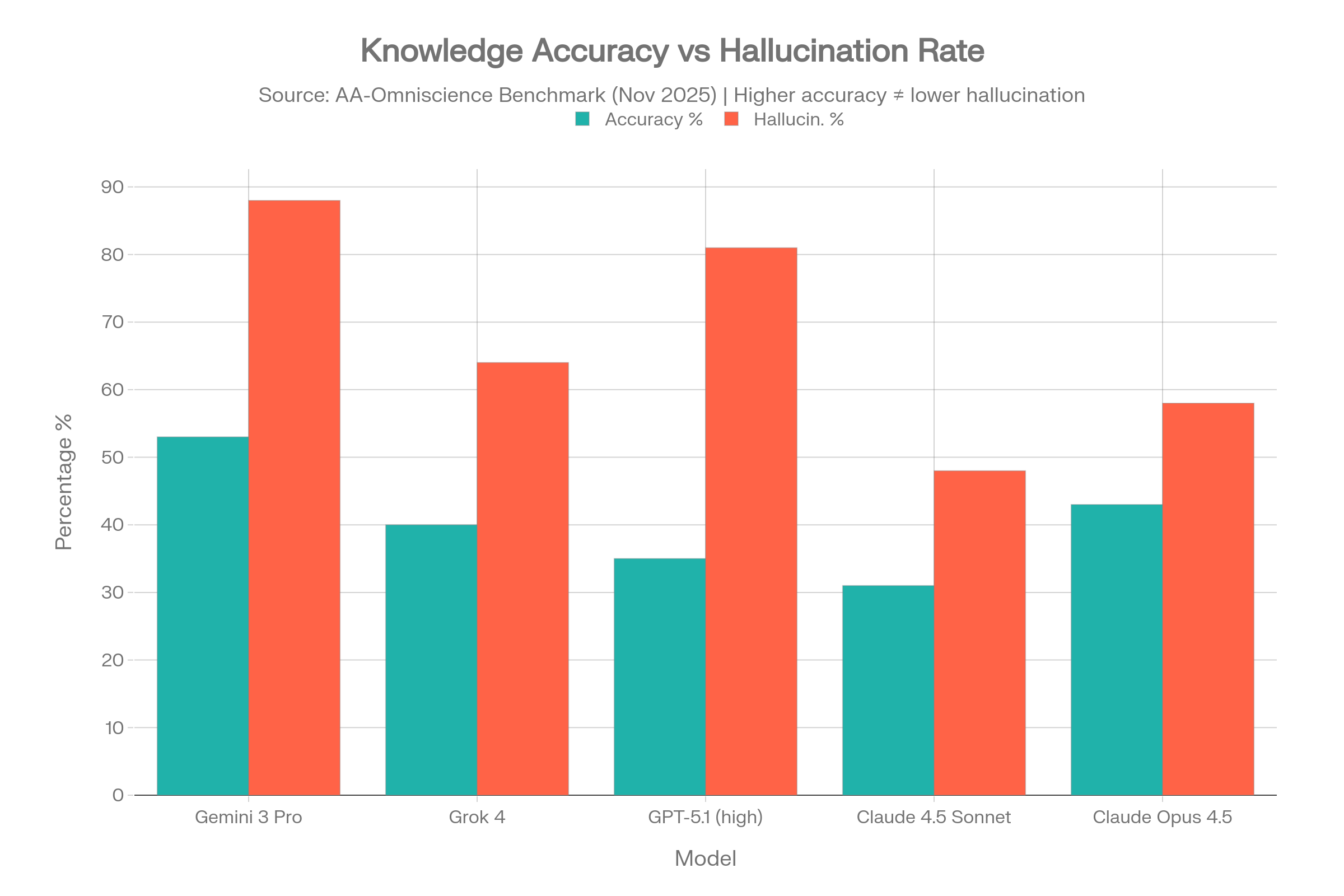
Static models routinely fail on:
- Current prices, exchange rates, and market data
- Recently enacted regulations or policy changes
- Breaking news and emerging trends
- Product specifications and availability
- Updated statistics from ongoing research
Without live data retrieval, an automated blog post about "2026 tax filing thresholds" will likely propagate outdated information. Readers notice, trust erodes, and search engines penalize thin content.
What Live Web Research Means for Automated Blogging
Live web research in automation is the practice of querying search engines, APIs, and structured databases during content generation. The system then injects retrieved information into the model's context window. This relies on real-time retrieval rather than pre-processing a static knowledge base.
The technique is called Retrieval-Augmented Generation (RAG). First formalized in Lewis et al.'s 2020 research on knowledge-intensive NLP tasks, RAG separates the language model's reasoning ability from its factual knowledge base. The model writes; the retrieval system supplies the facts.
Modern automated blogging stacks use two distinct retrieval layers:
| Layer type | Examples | Output format | Best suited for |
|---|---|---|---|
| AI-native web retrieval | Tavily, Exa, Linkup, Brave Search API | Pre-cleaned markdown, semantic summaries | Direct LLM context injection |
| Traditional SERP scrapers | SerpApi, Serper.dev, Firecrawl | Raw SERP metadata, requires HTML parsing | Custom extraction pipelines |
Microsoft retired the standalone Bing Search API on August 11, 2025, accelerating migration toward AI-native alternatives. The Brave Search API indexes over 40 billion pages independently of Google or Bing, offering a distinct corpus for verification.
The Live Research Pipeline: From Query to Published Fact
A production RAG pipeline for automated blogging follows five sequential stages. Each stage adds latency but improves output quality.
- Query formulationThe system analyzes the article brief and converts claims into specific search queries. "Discuss 2026 capital gains tax rates" becomes targeted queries for IRS publications and verified financial journalism.
- Source retrievalSearch APIs return ranked results. Advanced pipelines execute multiple parallel queries and apply cross-encoder reranking to surface the most relevant passages.
- Context injectionRetrieved text is chunked, deduplicated, and formatted for the LLM's context window. AI-native APIs like Tavily return pre-structured markdown optimized for this step.
- Grounded generationThe model generates prose constrained by the injected context. It can cite, paraphrase, or synthesize, but its factual assertions are tethered to retrieved sources rather than parametric memory.
- Verification and scoringOutput passes through automated fact-checking using frameworks like the RAG Triad (Faithfulness, Answer Relevance, Context Precision) and FActScore atomic proposition verification. Vectara's HHEM cross-encoder flags factual contradictions before publication.
This latency is prohibitive for interactive chatbots but manageable for automated blogging. Production pipelines decouple generation from user requests using asynchronous job queues such as Celery or BullMQ. Articles generate in the background and publish on schedule.
Source Attribution and Trust Signals
Live-researched content includes inline citations to primary sources. This allows readers to verify claims and signals to search engines that the content is substantiated.
Domain authority matters in source selection. A pipeline retrieving from .gov domains, established news organizations, and peer-reviewed journals produces more trustworthy output than one scraping unmoderated forums. Production systems filter by domain reputation and exclude known low-credibility sources.
The difference between static and live-researched output is stark:
| Dimension | Static LLM output | Live-researched RAG output |
|---|---|---|
| Factual freshness | Frozen at training cutoff | Current as of generation time |
| Hallucination rate (FActScore) | 37–47% | Under 10% |
| Source verifiability | None | Inline citations to retrieved pages |
| SEO risk profile | High: unoriginal, potentially false | Lower: substantiated, fresh |
| Reader trust signals | Generic, unanchored claims | Specific, attributed facts |
SEO Performance and Google's Stance on Automated Content
Google does not ban AI-generated content. It bans low-quality, manipulative content regardless of production method. Google's official guidance states: "Rewarding quality content, however it is produced, has been core to Search for many years."
However, Google's March 2024 core update raised the stakes. The company retired its standalone Helpful Content System classifier and absorbed helpfulness signals into core ranking algorithms. It introduced the "Scaled Content Abuse" spam policy, defined as generating many pages primarily to manipulate search rankings without adding value for users.
Scaled content abuse is when many pages are generated for the primary purpose of manipulating search rankings and not helping users. This abusive practice is typically focused on creating large amounts of unoriginal content that provides little to no value to users, no matter how it's created.
Google Search Central Documentation, Official Web Search Spam Policies
The March 2024 update delivered measurable results: Google confirmed a 45% reduction in low-quality, unoriginal content appearing in search results following rollout completion.
Live web research directly addresses Google's quality signals. Fresh, attributed content demonstrates Experience, Expertise, Authoritativeness, and Trustworthiness (E-E-A-T). Accurate answers reduce bounce rates because readers find what they searched for rather than encountering stale information.
Implementation Pitfalls and How to Handle Them
Live research is not automatic quality. Poor implementation introduces new failure modes.
Paywalled and Restricted Content
Retrieval systems frequently encounter paywalled news articles or gated research papers. The headline may be retrieved, but the full factual context is inaccessible. Production pipelines should detect paywall indicators and either exclude these sources or flag them for human review rather than synthesizing from incomplete information.
Conflicting Sources
Live search may return contradictory claims from equally credible sources. Robust pipelines surface these conflicts rather than arbitrarily selecting one version. The generated article should acknowledge uncertainty or present multiple verified perspectives.
Low-Quality Scraper Contamination
Search results include content farms and auto-generated summaries lacking original reporting. Without filtering, a RAG pipeline can ingest and regurgitate this material. Domain allowlists, content freshness weighting, and semantic deduplication help exclude noise.
Copyright and Fair Use Boundaries
Live scraping raises legal considerations. Retrieval systems download and temporarily store copyrighted web content for analysis. Fair use generally protects intermediate copying for transformative purposes like summarization, but wholesale reproduction infringes copyright. Automated blogging pipelines should:
- Limit direct quotation to brief, attributed excerpts
- Transform retrieved information through original synthesis and structure
- Link to sources rather than substituting for them
- Respect robots.txt and terms of service on target sites
The value added by live research is verification and freshness. Systems that merely republish scraped text without transformation violate both Google's spam policies and copyright law.
Evaluating Whether Your Setup Needs Live Research
Not every blog post requires real-time retrieval. Evergreen how-to content on established topics may be adequately served by well-curated static knowledge bases. However, live research becomes essential when content covers:
- Time-sensitive news and trend analysis
- Financial data, pricing, and market conditions
- Regulatory compliance and legal requirements
- Product reviews and specifications
- Competitive intelligence and industry benchmarks
- Event coverage and scheduled announcements
If your automated blog operates in these domains and currently generates without live grounding, your factual error rate likely approaches the 37–47% baseline documented in LLM hallucination research. The 73% to 86% improvement from RAG integration represents a direct quality upgrade readers and search engines will detect.
What to check before your next automated post goes live
- Does every statistic, date, and proper noun trace to a retrieved source with a working URL?
- Are sources from credible domains rather than unverified forums or content farms?
- Does the article add original structure and synthesis, or merely rearrange scraped sentences?
- Have you verified no paywalled sources were cited without accessible evidence?
- Is the information current as of generation time, or could training-cutoff staleness have crept in?
Automated blogging at scale demands more than fluent text generation. It demands a verification layer that connects every claim to the live web. If you are evaluating platforms, compare plans that include live research infrastructure against those relying on static model output alone. For teams ready to implement, get started with a system that grounds generation in real-time data from the first article.
Keep reading
More on Blog Automation
- Blog AutomationNov 14, 2026
Content Idea Generation Tools for Blog Automation
Compare leading content idea generation tools for automated blog workflows, evaluating API compatibility, output structure, and integration requirements that determine whether a platform can sustain hands-free publishing.
Read article - Blog AutomationNov 9, 2026
Content Automation Platform Comparison for Small Business Blogs in 2026
A practical evaluation of content automation platforms for small business blogs, covering pricing models, integrations with WordPress and Shopify, ease of use for non-technical teams, and compliance considerations.
Read article - Blog AutomationOct 22, 2026
Automated SEO Tools for Blog Automation
Automated SEO tools analyze search data, optimize content structure, and execute technical SEO tasks with minimal manual intervention. This guide compares the leading platforms for blog automation in 2026, including pricing, integrations, and selection criteria.
Read article